

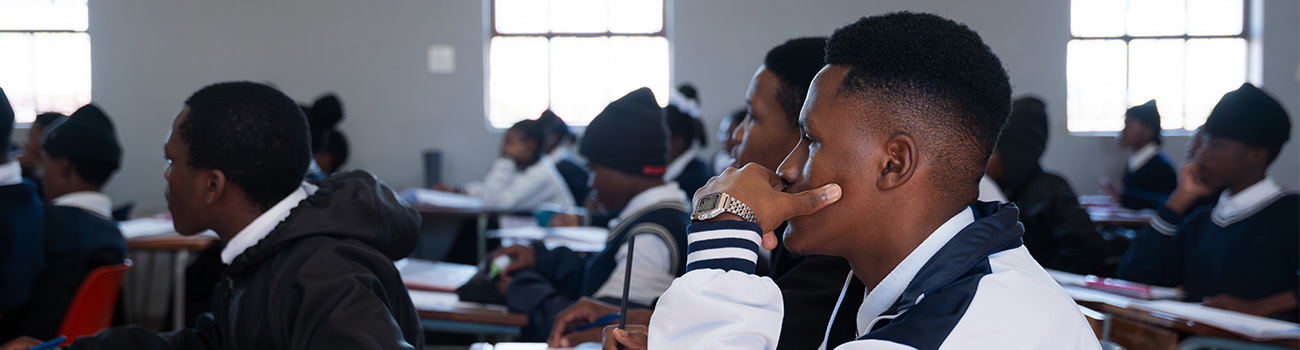

As South Africa (SA) continues to grapple with a national savings rate of just 0.5% and a significant retirement savings crisis, a flagship financial literacy initiative is demonstrating how scale and practical education can build a more inclusive economy.
Over the past three years, the ResponsibleME Citadel Investing for Young Adults programme has reached more than 96,400 learners across 102 no-fee schools in six provinces, equipping the next generation with the tools to make informed financial decisions.
The programme, which launched in 2024, has rapidly expanded from its initial pilot in the Western Cape and Eastern Cape to include Gauteng, KwaZulu-Natal and most recently, the North West and Northern Cape. This growth reflects a profound demand for practical financial skills in both peri-urban and rural communities where access to financial education has traditionally been limited. The programme has already led to a substantial improvement in financial literacy among its participants, including their financial vocabulary, their grasp of savings and their ability to open a bank account. (See Figure 1, 2 and 3)
Assessment results, year on year:
Understanding financial terminology
| Year | Provinces | Pre – before the course | Post – after the course | Improvement in percentage points |
| Year 1 – 2023/24 | WC & EC | 45% | 57% | +12% |
| Year 2 – 2024/25 | GP & KZN | 54% | 72% | +19% |
| Year 3 – 2025/26 | NW & NC | 57% | 75% | +18% |
(Figure 1) Improvement: Financial terminology improvements
Having a savings plan
| Year | Provinces | Pre – before the course | Post – after the course | Improvement in percentage points |
| Year 1 – 2023/24 | WC & EC | 19% | 49% | +30% |
| Year 2 – 2024/25 | GP & KZN | 26% | 55% | +29% |
| Year 3 – 2025/26 | NW & NC | 38% | 68% | +30% |
(Figure 2) Improvement: Savings plan
Applying for a bank card
| Year | Provinces | Pre – before the course | Post – after the course | Improvement in percentage points |
| Year 1 – 2023/24 | WC & EC | 14% | 30% | +16% |
| Year 2 – 2024/25 | GP & KZN | 34% | 54% | +20% |
| Year 3 – 2025/26 | NW & NC | 40% | 66% | +26% |
(Figure 3) Improvement: Applying for a bank card
Adressing the savings crisis through education
The strategic necessity for the programme is underscored by recent data showing that nearly one in two adults in SA is not saving at all, while 86% of economically active adults have no formal retirement savings plan in place. Recent academic research also shows that SA’s national savings rate is at an extremely low level, compared to its emerging market peers, at a rate of 0.5%. The research also found that access to financial resources and knowledge was “essential for individuals to manage their finances effectively, invest and save, and contribute to the country’s overall economic growth”. With more research showing that only 51% of the population could be considered moderately financially literate, the gap between working and building long-term wealth remains a primary driver of the country’s inequality gap.
“Cycles of poverty are often perpetuated by a lack of access to financial education,” says Jean de Villiers, Citadel Head of Philanthropy. “That is why we are committed to providing the financial literacy tools learners in no-fee-paying schools need to start levelling the playing field and help ensure that young people in SA can take responsibility for their futures”.
From pilot to flagship: a strpty of scale
The programme’s impact is measurable and sustained. What began with 19,067 learners in 2024 at 24 schools in the Western and Eastern Cape, more than doubled in reach by 2025. This growth was made possible by the support of the Citadel Group’s empowerment trust, the Citadel Philanthropy Foundation Community Trust. The programme expanded into Gauteng and KwaZulu-Natal, reaching a further 38,450 learners across 32 schools, bringing the programme’s cumulative two-year reach to 57,517 learners across 58 schools.
In 2025-2026, the programme was rolled out across the North West and Northern Cape, where it reached 38,958 learners in 44 schools. Over the full three years, the ResponsibleME Citadel Investing for Young Adults programme has reached more than 96,400 learners across 102 no-fee schools with practical financial education designed to help young people in SA make more informed money decisions.
The initiative’s success lies in its transition from a fully digital course to a tangible, booklet-based curriculum, ensuring that infrastructure challenges like limited connectivity or lack of devices would not hinder learning.
The tailor-made 10-module programme covers essential life skills, including:
• Budgeting and saving
• Banking and bank charges
• Taxation, inflation and insurance
• Investing and financial planning
• Entrepreneurship and drafting business plans
A ripple effect beyond the classroom
The impact of the programme extends well beyond individual learners. Educators have reported a satisfaction rate of over 96%, noting that the course cultivates critical thinking and provides simple ways to explain complex economic interactions.
“Financial literacy is the most difficult topic from Grade 8 up to Grade 12,” says Mrs Y Dube, Principal of Tidimane Secondary School near Rustenburg in North West. “Now they are mastering the topic. They are exposed to so many things, and they also become global citizens because they learn to interact with the global economy.”
This sentiment is echoed by parents who have observed their children applying these lessons at home. One parent noted that his child began teaching the family how to save for emergencies and use money correctly.
Measurable outcomes for a brigter future
The ResponsibleMe Citadel Investing for Young Adults programme uses pre- and post-assessments to track its effectiveness. Early results showed a marked improvement rate in financial literacy among students, with more recent cohorts showing that learners are now actively opening bank accounts and planning for further education to secure better job prospects. In Gauteng, for instance, 83% of learners, who completed the course, now plan to pursue further studies as a direct result of their new financial awareness. In the North West and Northern Cape, 26% of the learners gained the confidence to open a bank account for the first time, while they were also 30% more likely to follow a savings plan after their first year in the course.
“At Citadel the measure of our success will not simply be the wealth we create, but also the future we help create,” concludes Citadel CEO, Sajeel Maharaj. “When good businesses do the right things for the right reasons, they don’t just grow, they help build the South Africa we all believe is possible – one financially literate child at a time.”